

What does it really take to become an industry leader in a crowded and competitive market? Can anyone position themselves as an industry leader, or is it reserved for billion-dollar brands and lucky insiders? Which habits and strategies separate an industry leader from everyone else trying to get noticed?
Personal Branding Insights
Becoming an industry leader isn’t about titles, vanity metrics, or overnight success—it’s about consistently showing up with clarity, courage, and value. This blog breaks down what truly defines an industry leader, from innovation and calculated risk-taking to being outspoken, informative, and deeply responsible. Through real-world examples and firsthand observations, it shows how both individuals and companies can rise above the noise without building a massive corporation or waiting for permission.
You’ll also discover the practical strategies that help an industry leader sustain long-term influence, including building loyal audiences, hiring and retaining top talent, adapting to modern work culture, and leveraging personal branding, networking, and collaboration. Whether you’re a founder, executive, or ambitious professional, this guide outlines how to position yourself as the go-to authority in your space—and keep that edge as your industry evolves.
Thought leader, influencer, industry “giants”— there are many terms used to describe an industry leader.
Some people come into the position by climbing the ladder (and a little bit of luck), while others may claim this title after carefully crafting their expertise.
Today, I’m going to show you how you can do a little bit of both if you want to become a leader in your industry.
RELATED: WHY DO YOU NEED A PERSONAL BRANDING CONSULTANT?
What is an Industry Leader?
You can likely recognize leaders in your industry immediately.
An industry leader stands out from the crowd within a specific niche. Industry leaders can be companies or personal brands. Some industry leader examples of companies are Apple, Amazon, and Tesla. It just so happens that the people associated with those brands (Steve Jobs, Tim Cook, Jeff Bezos, and Elon Musk) can also call themselves industry giants.
So, what exactly sets these leaders apart? An industry leader is a business or individual that excels beyond most or all peers, reaching a level of acclaim, respect, or even “household name” status within their field. This dominance can be measured by sales, revenue, subscribers, audience reach, or other notable achievements. In many cases, they’re the benchmark—the ones others look to for guidance and inspiration.
Think of Apple and Coca-Cola as iconic household names in the B2C world, or Stitch Fix and Netflix in the DTC space. On the B2B side, you have powerhouses like IBM, HubSpot, or Amazon Web Services (AWS). These are the brands and personalities shaping their industries, setting trends, and often redefining what’s possible.
But do you need to craft a billion-dollar corporation to become a prominent voice in your trade?
Absolutely not. Let me explain.
What truly sets these leaders apart isn’t just their recognizable names or logos—it’s a combination of characteristics and strategic moves that consistently keep them ahead of the pack.
RELATED: THE FIRST 5 THINGS YOU SHOULD DO WHEN BUILDING YOUR BRAND
Characteristics of an Industry Leader
I’ve seen people go from no-names to online personalities in under a year. And I live in LA— the epicenter of entrepreneurship and ambition.
Out of all of the people I have in my inner circle, the ones who I’ve seen find success all share a few core characteristics. Grant Langston, the former CEO of eHarmony, had been a mentor of mine at one point in time. I instantly recognized what made him so successful. He gives direct, no-fluff advice. He always gave it to me straight, which I wholeheartedly admire in a business relationship.
My business manager’s innovation and dedication to posting informative content to her social media accounts are probably how she managed to team up with giants like Gary Vaynerchuk.
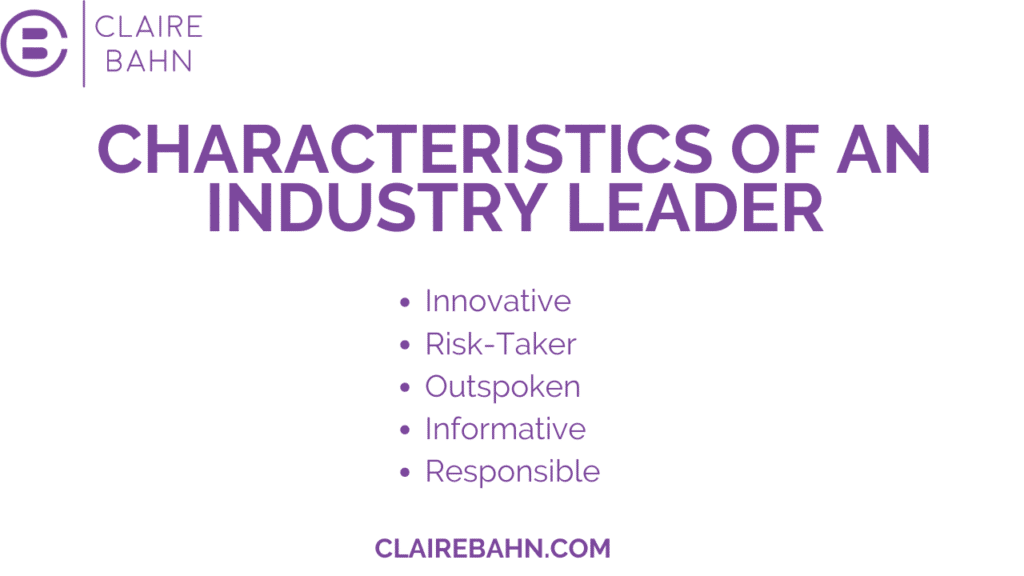
So what are the characteristics of an industry leader? Let me tell you what I’ve noticed:
1. Innovative
An easy way to get noticed in your line of work is to stick your neck out with (sometimes) insane ideas. It’s all about throwing ideas out there until one sticks— or until you can fine-tune a single idea to make it the best it can be.
If you’re never testing out unique concepts, you’ll never know how far you can go. If you’re only repeating the same old song and dance that we all read about over and over again, nobody is going to remember you.
Learn to be comfortable with standing out and then actually get there by pitching and testing out even the most outlandish ideas. Also, remember this: you don’t need to reinvent the wheel. Just look for new ways to get people from point A to point B faster or more comfortably.
But here’s a little secret: true industry leaders never stop innovating. They don’t just dream up new products or services—they also find inventive ways to work smarter, solve problems like sustainability or supply chain headaches, and challenge what’s “normal” in their industry. Whether you’re in tech, design, or making the world’s best cup of coffee, pushing boundaries should be your comfort zone.
Why Innovation in Business Models Matters
If you’re angling for long-term industry leadership, playing it safe just won’t cut it. The businesses that consistently rise to the top aren’t the ones scraping by on autopilot—they’re the ones reinventing how they operate as the world evolves around them.
Let’s face it: the way we do business today would have blown minds a few decades ago. It’s the ability to reimagine what’s possible—to overhaul old playbooks and turn them on their heads—that keeps companies in the spotlight rather than in the history books.
If you think about the heavyweights still thriving after decades, you’ll spot a trend: they change with the game, not after it. Rather than clinging to yesterday’s success formula, they break it apart and rebuild something better. That’s the difference between companies that fade away and those that keep setting the pace.
So yes, tweak, experiment, and don’t be afraid to scrap what isn’t moving you forward. When you make innovation the rule (not the exception), you give yourself the best chance to not only lead your industry, but to keep your edge as the ground keeps shifting under everyone else’s feet.
Keep the Innovation Engine Running
So, how do you make sure your company is never mistaken for that dusty, forgotten VHS tape sitting in the corner of Blockbuster history? Simple (well, sort of): Keep poking at your own business model with a stick—constantly. Never let the “way things have always been done” lull you into a nap.
1. Embrace Change—Relentlessly
Innovation thrives where curiosity lives. Regularly ask, “What if?” and “Why not?” Challenge every process and product—even the ones everyone takes for granted. The best companies aren’t afraid to stir the pot (sometimes vigorously), whether it means tweaking what exists or exploring wild new territory.
2. Steal a Page From the Greats
Look at how companies like Apple and 3M treat research and exploration—not as an afterthought, but as a centerpiece. They budget for failed experiments, strange prototypes, and brainstorming sessions that sound bonkers on paper. Sure, some ideas may flop, but the act of pushing boundaries is what keeps them at the top.
3. Encourage Experimentation at Every Level
Don’t reserve the fun for the C-suite. Give everyone—from the intern to the lifers—a seat at the “crazy ideas” table. Make it safe for people to suggest offbeat solutions without the fear of looking foolish. If something doesn’t work, it’s not a failure—it’s another step closer to the breakthrough you’re chasing.
4. Stay Curious, Stay Inspired
Read widely. Attend conferences outside your comfort zone. Pick the brains of people from unrelated industries. Sometimes, the next big idea for your team is waiting in a completely unexpected place—a sushi conveyor belt, a video game chatroom, or a nonprofit’s scrappy fundraising campaign.
5. Make Innovation a Habit
Schedule it. Celebrate it. Set targets for experimenting just as you would for sales or performance metrics. Regularly audit your business model, looking for cracks, opportunities, or outdated assumptions. The only wrong way to do it is thinking you’re done.
By keeping innovation woven into the day-to-day fabric of your company—and not treating it as a “one-and-done” event—you’ll not only stay relevant, but you might just become the pacesetter the rest of the pack tries to catch.
2. Risk-Taker
We all know that being a full-time entrepreneur is a risk in and of itself. However, this is where a lot of could-be thought leaders fall short.
They aren’t ready to take on more risks.
When you’re just getting into the game, you probably think you’ve exhausted all your resources: you’re just getting funding, you’ve taken out a loan, you haven’t built up your clientele yet, your income isn’t consistent, etc.
With so much unknown, deliberately taking more risks to expand your personal brand and business is irresponsible, right?
Being a risk-taker doesn’t always mean injecting more cash into your business. As I mentioned before, a risk-taker is willing to put their ideas out there, despite rejection.
Plus, the more you actively try out your ideas, the more you’ll understand your product, service, or audience.
True industry leaders understand this balancing act. They’re not reckless, but they’re also not afraid to step into the unknown. Sometimes, that means doubling down on a bold vision, betting on a new market, or simply being willing to fail publicly so you can learn faster than everyone else.
RELATED: HOW TO USE SOCIAL MEDIA TO BOOST YOUR CAREER
3. Outspoken
An easy way to spot an industry leader, whether you’re reading a blog, watching a YouTube video, or scrolling through social media, is to take note of your initial reaction.
Did something they said make you feel relieved? Did they make you think, “Yes, that’s me to a T!”
People who can invoke that kind of reaction tend to be more than just excellent copywriters or storytellers. These people like to break the cycle. When they do this, they seem like a breath of fresh air to you. These people aren’t afraid to swim against the current, and they’ll say exactly what they’re thinking.
Industry leaders don’t blend in. They’re outspoken, unafraid to challenge the status quo, and willing to spark real conversations—even when it’s uncomfortable. Whether it’s calling out inefficiencies in their field or advocating for a controversial new approach, their confidence and authenticity build trust and set them apart from the crowd.
4. Informative
These characteristics aren’t conclusive. You can be an innovative and informative thought leader while your competition is the loud and outspoken one.
This is why they say there’s an audience for everyone. And it’s why I say you need to stay loyal to your personal brand.
If you’re someone who wants to be an informative leader, you need to be one step ahead of the game. Informative figureheads are always on top of industry trends, and they’ll be the first to guide their audience through new territory.
By providing this stream of consistent information, people can begin to rely on you, thus pushing your authority to the front of the crowd.
It’s not just about being loud—it’s about being useful. The best leaders build loyalty by helping others make sense of change, breaking down complex ideas, and giving their audience the tools to succeed. Over time, this consistency creates a dedicated following that comes back for your insights, not just your personality.
Trusted Knowledge Source
When it comes to establishing yourself as an industry authority, building a reliable base of knowledge is non-negotiable. It’s not just about knowing your stuff—it’s about being the go-to person others turn to for insights, solutions, and trends.
Think about the industry leaders you admire (hello, Neil Patel and Seth Godin). What do they all have in common? They consistently deliver content that others, even competitors, pay attention to. This might be a blog that goes beyond surface-level tips, a YouTube channel packed with actionable how-tos, or a podcast that dives into real industry pain points.
Your knowledge base doesn’t need to be some stuffy database, either. It can show up as:
- A steady stream of relatable blog posts
- In-depth explainer videos or Instagram Lives
- Timely, detailed white papers on what’s trending
- Live Q&A sessions or workshops for problem-solving in real time
- Podcast episodes that don’t sugarcoat the hard stuff
The point? Every time you share meaningful, well-researched content, you’re not just informing your audience—you’re building trust and loyalty. And when people rely on your expertise before anyone else’s, that’s when you shift from being just another voice in the crowd to a true industry leader.
5. Responsible
A thought leader is willing and able to take responsibility at all times. I told you about personal brands who reacted badly to events in 2020. This caused severe backlash and, ultimately, caused these leaders to lose respect (and followers) from their audience and peers.
What’s commendable about how these people managed their online reputation is that they took responsibility. Industry leaders don’t try to pin the blame on their employees, and they certainly don’t try to defend themselves when they’re being “called out.”
Likewise, if you’re someone who is constantly complaining that “the algorithm” is the reason nobody sees your content and the reason your engagement is low, you’re not ready to be a leader in your industry.
And responsibility goes deeper than just crisis management. The most respected leaders invest in building strong teams, supporting their people, and planning strategically for the future. They know it’s not just about being the face of a brand—it’s about creating a culture that attracts passionate, skilled people and gives them a reason to stick around.
6. Loyalty-Builders
Ever noticed how some brands have fans, not just customers? Whether it’s Apple, Toyota, or your favorite local bakery, industry leaders know how to inspire loyalty. Sure, having a killer product helps, but loyalty is the real differentiator in a world where everyone’s fighting for attention. Leaders build trust, deliver consistent value, and create experiences that make people want to come back year after year—even if the competition is a little cheaper or flashier.
7. Strategic and People-Focused
Here’s a little extra that separates the best from the rest: top-tier leaders don’t just wing it. They plan, invest in exceptional management, and surround themselves with passionate, talented teams. They’re not afraid to pay more for the right people, knowing that a well-led, excited team is the secret sauce behind every industry-shaking innovation.
In the end, industry leaders share a few key traits: they innovate, take risks, speak up, inform, take responsibility, inspire loyalty, and invest in people and planning. If you can weave these qualities into your approach, you’ll not only stand out—you’ll stay ahead.
RELATED: HOW YOUR PERSONAL BRAND CAN FUTURE-PROOF YOUR CAREER

Benefits of Being Recognized as an Industry Leader
Reaching the status of an industry leader comes with its own set of perks—and they go far beyond bragging rights at networking events.
When you’re recognized as a top name in your field, your voice holds more weight. People seek out your opinion, whether that’s clients, collaborators, or even competitors. You become the go-to source for advice, trends, and breakthrough ideas.
This kind of trust and credibility translates into real opportunities:
- Greater Visibility: Media outlets, podcasts, and event organizers are more likely to invite you to share your expertise.
- Competitive Edge: Potential clients gravitate toward industry leaders because they want to work with the best—think of how Apple sets trends others follow.
- Influence & Impact: Your insights may shape the direction of your entire field, opening doors to collaborations, partnerships, and expansion.
- Stronger Network: Other successful professionals want to connect, which accelerates growth for both your personal brand and your business.
In short, being an industry leader means you’re not chasing opportunities—they’re landing in your inbox.
Why Top Companies Prioritize Leadership and Strategy
If you’ve ever wondered why industry leaders like Apple or Amazon consistently stay ahead of the curve, take a look at who’s steering the ship. The secret sauce? They don’t skimp on leadership. Top-performing companies invest generously in exceptional management and executive talent—and there’s good reason for it.
Think of it this way: the best minds bring not only experience, but also a clear sense of purpose and vision. They make strategic decisions with a “why” behind every move, guiding the company with intention rather than guesswork. This is worlds apart from organizations that treat management as just another line item, trimming costs at the expense of innovation.
Instead, leaders use their financial edge to attract and keep the brightest talent. They know that investing in visionary leaders isn’t an expense—it’s a catalyst for growth. Along with that, these companies double down on forward-thinking strategic planning. They make it a priority, revisiting their goals and adjusting course as necessary.
It’s this ongoing commitment—to both great leadership and thoughtful strategy—that keeps industry giants at the top of their game.
The Biggest Challenges in Assembling an Industry-Leading Team
I get asked all the time: “What’s the hardest part about building a team that stands out?” Honestly, the answer is never as simple as “hire the best” (if only!). Especially living in LA, where competition is thick and everyone’s paddling their own canoe upstream, the real obstacles are a little more layered—and a lot more interesting.
1. Attracting Top Talent in a Competitive Market
Finding talented people is hard enough, but catching their eye (and convincing them to join your ship, not Google or Netflix) is a whole different game. Everyone wants seasoned pros, but let’s be real—these folks have options, and the good ones are on speed dial.
2. Standing Out as a Magnet for Excellence
The key? It often starts at the top. If your leadership doesn’t shout “visionary” from the rooftops, you’ll have a tough time pulling in those A+ players. Teams crave guidance and inspiration—they want to see leaders who aren’t afraid to set trends, challenge the status quo, and show off their industry savvy. Think Grant Langston-level leadership or Gary Vee’s infectious hustle.
3. Balancing Perks with Purpose
Sure, you can dangle shiny carrots—salary, health plans, stock options—but the dream team is looking for more than a fat paycheck. Today’s leaders want a mission that excites them, a brand with values, and a crew they’re proud to join. Just tossing money at the problem won’t cut it.
Bottom line: if you want to attract (and keep) the kind of people who’ll elevate your brand, you have to lead by example, step into the limelight, and shape a culture that ambitious minds want to be part of.
Build a Team That’s as Invested as You Are
When it comes to true industry leadership, it’s not just about the visionary at the helm—it’s about the entire crew rowing the boat (sometimes upstream, sometimes in a hurricane). The most influential leaders know that hiring skilled, driven people isn’t just a nice-to-have; it’s a non-negotiable.
Here’s why: team members who are both talented and passionate bring ideas, energy, and a bit of much-needed “let’s do this!” attitude. They thrive on collaboration, challenge the status quo, and push your business further than you can alone. This creates a culture of excellence that’s contagious—from product development to customer support and everywhere in between.
Industry leaders also recognize that top talent wants more than just a paycheck—they want purpose, growth, and a place where their ideas matter. By actively seeking out these go-getters (and yes, compensating them fairly), you’re ensuring your organization stays adaptable and future-ready.
As work culture evolves, organizations that invest in their people become magnets for new talent and keep their best performers, while those stuck in the past? Well, let’s just say they become prime hunting grounds for recruiters.
So, if you’re serious about leading the pack, remember: your team is your secret weapon. Build the environment they want to be part of, and you’ll set a standard others only dream of reaching.
Adaptability: The Key to Attracting and Keeping Top Talent
I’ve said it before, and I’ll say it again: Gone are the days when a hefty paycheck alone was enough to keep top performers loyal to your team. Just look at what’s been happening since the pandemic—people are willing to trade a bigger salary for a better work culture and more flexibility. I’ve seen friends in LA walk away from high-paying gigs because they wanted work-life balance that actually means something (read: not just lip service on a careers page).
Why? Because nothing beats feeling excited to show up for work every day. A positive culture and genuine work-life balance routinely win out over compensation, especially among talented individuals who value fulfillment and mental wellness as much as a direct deposit.
Industry leaders recognize this shift and aren’t afraid to adapt to it. They understand that being stuck in old ways—like rigid schedules or requiring everyone to be chained to a desk—will cause your best people to look elsewhere. Instead, they’re crafting workplaces where talented individuals don’t just clock in and out, but genuinely thrive. Here’s what I’ve observed the most innovative companies doing:
- Embracing Flexible Work Arrangements: Whether it’s hybrid schedules or remote-first setups, they trust their teams to deliver and focus on results, not office hours.
- Prioritizing Culture and Well-Being: Creating an environment where people feel valued, respected, and heard. This means investing in mental health, open communication, and real opportunities for growth.
- Offering Competitive Benefits: Sure, salary matters. But so do tailored perks like learning stipends, generous parental leave, and wellness programs.
When you’re known as an employer who “gets it,” you don’t have to settle for average. You’ll attract passionate professionals who believe in your vision and want to stick around to help build it. More importantly, adapting to changing work preferences shows you’re listening—a quality every true leader should have.
Recruiting and Retaining Top Talent
Let’s get one thing straight: if you want to cement your place as an industry leader, you absolutely need the right people by your side. Sure, it sounds like a no-brainer, but actually attracting and hanging onto outstanding talent? That’s where the real work begins.
Talent is the engine that powers innovation, customer satisfaction, and growth—basically, every metric that matters. When you hire people who are experts in their field (think the kinds of folks who get chased down by Google and Apple recruiters), your business levels up. Bringing on top-notch professionals means new ideas, sharper execution, and a culture that inspires others to reach higher.
But recruitment is only half the battle. If you don’t nurture your team and give them reasons to stick around—like opportunities to lead, grow, and be heard—they’ll be updating their LinkedIn faster than you can say “counter-offer.” Remember: legendary companies like Patagonia, Zappos, and Netflix are famous not just for what they make, but for who they hire and how they keep them.
To truly set yourself apart, your leadership team needs to embody the very essence of your brand and mission. People want to work for organizations where leaders walk the walk and where everyone feels connected to a bigger purpose. When your team thrives, your business will ride the front wave, not paddling behind it.
Building Loyal Customer Bases
Ever wonder why some brands attract fans who would rather camp outside a store than miss out on a product launch? It’s not just about having the flashiest tech or the fanciest features—though that certainly doesn’t hurt. The true secret is the community and trust these brands cultivate over time.
Loyalty in the age of endless options comes from more than just top-notch products. As industries evolve and the market gets crowded, what really sets successful leaders apart is their ability to make customers feel heard and valued—like they’re part of something bigger than themselves.
Think about the die-hard supporters of certain brands. Even if another company offers a slightly better price or feature, those loyalists stay put. Why? Because leaders in the space focus on:
- Creating consistent, positive experiences (so customers know exactly what to expect)
- Building an ecosystem that makes switching unthinkable (hello, seamless integration)
- Communicating authentically and directly with their audience (no robotic customer service here)
- Delivering value—even on the little things some might overlook
It’s this attention to building real relationships and fostering a sense of belonging that keeps customers coming back, year after year—sometimes even in spite of drawbacks or higher price tags. That’s the kind of loyalty industry leaders inspire, and it’s a lesson worth taking to heart if you want to be remembered for more than just your products.
Dominate Your Local Market
If you want to build your reputation as an industry leader, mastering your local market is where it all begins. Think about it—whether your “local” is your physical city, a specific niche, or even a particular audience demographic, you need to become the go-to expert in that space first.
Why start local? Because authority, like good word-of-mouth, tends to snowball. When you’re the first name people mention in your community, referrals and new opportunities chase you down. Success stories from companies like Warby Parker and Sweetgreen show how developing raving fans at home propelled their brands into national conversations.
Here’s why local domination matters:
- Instant credibility: When your peers and customers in a specific segment trust and recognize your brand, people outside that area will take notice. You create a ripple effect.
- Easier testing ground: It’s much less intimidating to fine-tune your offer, messaging, and customer experience with a smaller, focused group before tackling a larger market.
- Faster growth cycles: Your wins come faster, and you’ll be able to see what’s working (and what isn’t) without risking everything on a huge, resource-draining launch.
So, before you try to take over the world, focus on being a big fish in your pond. Prove you can serve and impress those closest to you, and pretty soon, you’ll find your influence reaching far beyond your starting line.
6 Industry Leader Strategies You Should Know
Where are you at in your business? Are you a founder, a CEO, or are you just learning how to start your side hustle?
No matter where you are, the one thing that will stay consistent on your journey is your personal brand. That’s why it is vital to define who you are, what you stand for, and what you are/want to be an expert in before anything else.
Only then can you move into your industry data, ideal audience demographics, content ideas, and ways to scale your business. Once you have a steady handle on those things, you’ll be able to slow down and do what it takes to become well-known in your sphere of influence.
Like I said, not all prominent figures are the same. You’ll find your audience by having an unwavering commitment to your personal brand (aka yourself). But to give you a little head start, here are six industry leader strategies you can use to push your way to the top!
1. Hire a brand expert
Sure, you can find checklists or free eBooks about how to pile together all the right aspects of your personal brand, but you’re always going to need a second pair of eyes.
More than that, you’re going to want an unbiased, outsider point-of-view to tell you their knee-jerk reaction to what they see, think and feel about your brand.
So, friends and family are out of the question when it comes to getting a review of your brand. Sorry— they just know you too well.
You can always ask for feedback from Facebook groups about your blogs, Instagram, videos, etc., but more often than not, they’re going to give you information that isn’t helpful.
A personal brand strategist will not only give you that no-fluff feedback I mentioned before, but I will also give you step-by-step, realistic ways to build a personal brand you’re proud of and one that will bring you the opportunities you’re looking for.
2. Present yourself as an industry leader on social media
I mentioned that the most high-achieving CEOs are outspoken. While this doesn’t necessarily mean you need to be loud or vulgar, it does mean you need to be consistent. And your day-to-day impact needs to happen on social media.
Social media is about being social. So, you need to open up channels for communication rather than just sharing your informative blogs, videos, and graphics.
It doesn’t matter which social platform you choose (though I highly recommend joining me on LinkedIn). All you need to do is show up (a lot) and voice what nobody else says.

3. Always keep learning
You’ll never get the attention you deserve if you’re always falling behind your competitors.
A leader is always learning. Every day, look for articles that talk about what’s happening in your industry, look for conversations about future projections, and then start creating your own content around the news.
For people to view you as an elite figure, you need to jump on hot topics as they happen in real-time. It’s even better if you can write up a blog or publish a video with your opinions and strategies on how people can make the most of this new information.
Build a Knowledge Base that Sets You Apart
Beyond staying informed, make it your mission to become a go-to resource in your field. The most respected industry leaders aren’t just keeping up—they’re setting the pace by sharing valuable insights and resources that others (even competitors) rely on.
Consider creating a robust knowledge base through:
- Consistent, in-depth blog posts or LinkedIn articles
- Insightful how-to videos or explainers
- White papers or research pieces that spark discussion
- Webinars, workshops, or even starting your own podcast
When you regularly contribute high-quality content, you elevate your reputation as a trusted authority. Over time, people will instinctively turn to you first for answers, trends, and perspective—because you don’t just follow the industry conversation, you help shape it.
RELATED: HOW STARTUP FOUNDERS CAN STEP UP THEIR PERSONAL BRANDING IN 5 STEPS
4. Write a book
I don’t mean a free eBook.
Self-publishing has become so easy these days that almost anyone can call themselves a published author. However, it’s pretty easy to see who took the DIY route (we’ve all seen the clipart book covers).
If you want to write a book, don’t just do it for the notoriety. Here are a few signs you’re ready to write a book for your personal brand:
- People are asking you for the same information daily.
- You’ve hit your target income and audience growth (writing a book takes time, so you can’t have other distractions).
- You have the ability to hire a proofreader, editor, and cover artist.
RELATED: DO CEOS NEED THEIR OWN PERSONAL BRAND? 5 TIPS FOR EXECUTIVE BRANDING
5. Network
This should happen on and offline (post-COVID).
In 2020, I went to the Alt-Summit to speak about personal branding. While being a speaker at one of the most notorious networking conventions was a massive win for me, I still would have gone.
The sheer amount of connections and opportunities you can pull from these types of events is mind-blowing (and completely worth the investment).
And if your goal is to book speaking arrangements at large-scale conventions like this, you need to attend one first. Take note of how industry leaders present themselves on stage. The way you speak, dress, and convey information is everything to the event hosts. Take what you learn and apply it to your online platforms.
Why Networking Fuels Industry Leadership
I know the word “networking” gets thrown around so much that it starts to lose meaning, but hear me out: building authentic connections is the backbone of real industry leadership.
There’s a reason all the movers and shakers show up at events like SXSW, TED, or even your local Chamber of Commerce happy hour. Every relationship you cultivate is a new door waiting to open—sometimes when you least expect it.
Networking isn’t just about swapping business cards or racking up random LinkedIn connections. It’s about creating a genuine presence—being the person people think of first when they need an expert or want to collaborate.
Some practical ways to deepen your network (no matter if we’re meeting IRL or via Zoom):
- Attend (and better yet, speak at) reputable conferences or summits in your niche.
- Host workshops, whether in-person at WeWork or via live webinars.
- Reach out for panel opportunities, podcasts, or even guest blog spots on sites like Entrepreneur or Forbes.
- Volunteer to moderate roundtables or industry Q&As.
Always, always follow up with real value after your first introduction—send an insightful article, make an introduction, or offer a quick tip tailored to their challenges.
In the end, your network acts as your credibility amplifier. When you’re connected to other thought leaders, opportunities start to multiply—media features, partnerships, even book deals. Trust me: leadership isn’t built in a vacuum; it’s built through relationships.
6. Collaborate
If you’re not currently able to attend an in-person networking event, the next best thing you can do to boost your authority is to collaborate with thought leaders in your industry.
You can do this by requesting to interview them on your Instagram Live, YouTube channel, or podcast. This expands your personal brand outside your circle and into their (typically larger) audience.
But don’t just collaborate for the sake of reaching new people. The goal of these collaborations is always for your audience. Think about which topics your audience wants to learn about, and seek out prominent voices in those sectors to bring onto your platform.
If you have a hard time booking well-known individuals, aim for the low-hanging fruit. Expanding your audience even by an inch is an inch in the right direction. Typically, these people will reciprocate the offer and ask you to be on their podcast or other media forms. Remember, there’s no such thing as bad press.
Plus, you never know who might be watching.
Becoming an authority in your industry isn’t easy. Even with a foolproof strategy in hand, it might not work if your personal brand isn’t ready.
It’s time to elevate your personal brand to align your visibility and notoriety with your expertise. Our personal branding services are built for high-achieving entrepreneurs, investors, founders, and executives just like you. Learn more about our process and book a strategy call today!

